AI search local SEO is one of those topics most business owners have not thought about yet. Which is exactly why it matters right now.
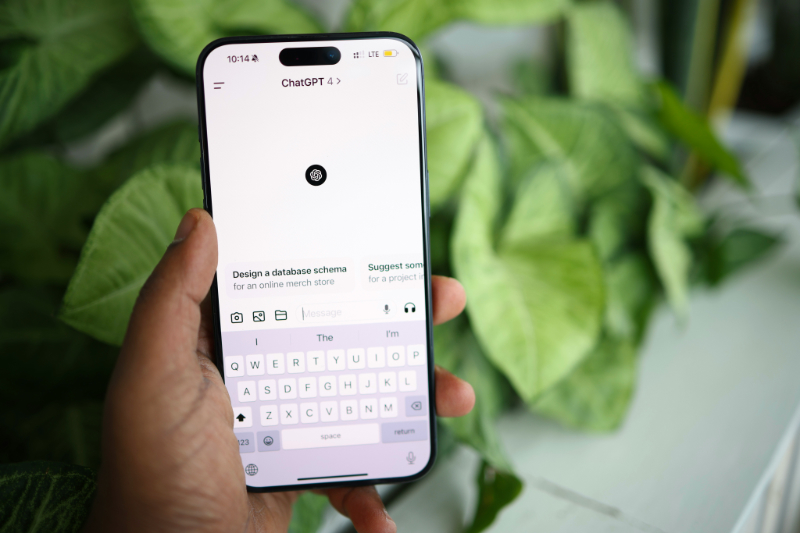
Here is a test worth doing. Open ChatGPT. Type: “your business name in Kingston upon Thames.” See what comes back.
If your business is not in the answer, you just found a gap. A growing number of potential clients are skipping Google entirely and asking AI tools directly for recommendations. When they do, the AI does not return ten options and let the user decide. It picks. And if it does not know who you are, it picks someone else.
This is not a reason to panic. The volume of AI-driven enquiries is still small compared to Google. But the direction is clear, the growth is fast, and the businesses getting ahead of this now are going to have a real advantage in two years. Here is what actually determines whether AI recommends you and what you can do about it.
How AI search local SEO actually works
When someone asks ChatGPT for a local service recommendation, the AI does not run a live Google search. It synthesises an answer from multiple sources it already trusts: your website, your Google Business Profile, review platforms and directory listings across the web.
The businesses that show up consistently in AI answers share the same characteristics: they are clear about who they are, their content is easy for AI to extract, and they appear across multiple independent platforms. The AI picks businesses it can verify easily. If your information is clear, consistent and appears across several independent sources, the AI gains confidence and recommends you. If those sources contradict each other or whole sections are missing, it picks someone easier to verify.
The key insight: this is not a new set of rules. It is the same trust logic that has always driven local SEO, applied more rigorously.
The data sources most local businesses have never thought about
Over 70% of local business results in ChatGPT come from Foursquare. Not Google. Foursquare.
Most people’s reaction to that is confusion, because Foursquare shut down its consumer-facing city guide in 2025. But the underlying business database is very much alive and it has a direct confirmed data partnership with OpenAI. When ChatGPT receives a local query, it queries Foursquare’s database first, which covers over 100 million businesses across 200 countries. Only if it cannot find enough there does it fall back to other sources.
The problem is that since the public app closed, most listings have gone unmaintained. Outdated contact details, old addresses, missing categories. Nobody has been updating them because nobody realised they mattered. They now matter enormously.
Search for your business on Foursquare right now. If you are not listed or your details are wrong, this is the single most impactful fix you can make for ChatGPT visibility. Claiming full management access costs around $20 and takes about twenty minutes. Almost nobody has done it yet.
The second source worth knowing about is Bing Places. ChatGPT has a direct integration with Bing search, and Bing Places listings feed directly into that ecosystem. If your business has a complete and accurate Bing Places profile, ChatGPT can reference that information when answering local queries. Most UK businesses have never touched their Bing Places listing. It is free to claim and takes less than an hour to set up properly.
The technical issue quietly blocking websites
This one surprises most business owners and web designers alike.
In July 2025 Cloudflare changed its default settings so that all new domains added to its platform have AI crawlers blocked from the start. Cloudflare protects roughly 20% of all websites on the internet so this affected a significant number of sites.
Here is the important thing: you do not need to have joined Cloudflare after July 2025 for this to affect you. Many existing users had already switched the block on manually without fully understanding what it does. So regardless of when you signed up, it is worth checking your settings.
If the block is active, AI tools like ChatGPT, Perplexity and Google’s AI Overviews cannot crawl your content. Your site can look completely fine in Google and have perfectly good technical SEO, but AI crawlers hit a wall and stop. You would never know from looking at your analytics.
To check: log into your Cloudflare dashboard, go to Security then Bots, and look for the toggle labelled “AI Scrapers and Crawlers.” There is also a more granular AI Crawl Control panel that lets you manage individual crawlers separately. Check both.
Switching the block off takes thirty seconds and immediately opens your site back up to AI search crawlers.
How to check if AI can actually access your site
If you are not on Cloudflare, your site is most likely accessible to AI crawlers. But it is worth confirming regardless of your setup.
The quickest manual check is your robots.txt file. Go to yourdomain.com/robots.txt in your browser and look for any lines that disallow access to crawlers with these user agent names: GPTBot, ClaudeBot, PerplexityBot or anthropic-ai. If those names appear with a Disallow rule, AI tools are being blocked at source.
For a faster answer, llmrefs.com is a free tool that checks whether AI crawlers can reach your site and flags anything blocking them. Takes about thirty seconds and requires no technical knowledge.
What to do on your website
Once AI can actually access your site, the content itself needs to be easy for it to extract and trust. This is where good local SEO and AI search local SEO overlap almost entirely, which is useful because it means the work you do here improves both.
Structure every page clearly with H2 and H3 headings, short paragraphs, numbered processes where relevant and bullet points for key facts. AI systems break your pages into individual passages and evaluate each one separately. Every section needs to make sense on its own, without the context of the rest of the page.
Start each service page with a direct answer in the first 40 to 60 words. Include an FAQ section on your key pages. AI tools rely heavily on clear question and answer pairs when building their responses and will often lift your FAQ content directly into an answer.
Be specific about what you do and where you do it. If your service pages are vague, or your location only appears in a footer, the AI cannot confidently verify that you are the right answer for a location-based query. Mention Kingston, London and Surrey naturally throughout your pages.
Schema markup matters here too. LocalBusiness, Service and FAQPage schema now serve a dual purpose: they help Google and they help AI tools parse your content more reliably. If you are unsure whether your site has this in place, read my post on how to properly structure a service page for local SEO.
Why third-party mentions matter more than your own content
This is where AI search local SEO diverges most sharply from traditional SEO. Research across 21,311 brand mentions found that 85% of all brand citations in AI responses come from third-party pages, not the business’s own website. AI tools strongly favour earned mentions and authoritative external sources over anything you publish about yourself.
Businesses appearing on four or more independent platforms are 2.8 times more likely to appear in ChatGPT responses. Cross-platform consistency is one of the strongest signals of legitimacy an AI system can detect.
What that means practically for a local service business:
Get listed in local and industry directories. Your local Chamber of Commerce, local business associations and any directories relevant to your sector. Each independent listing is a trust signal that AI can cross-reference. These are also the same citations that strengthen your rankings in the Google Local 3-Pack, so you get double value from the work.
Earn mentions in third-party content. A local news feature, a blog post that references your work, a case study published by a client. These carry far more weight in AI answers than anything on your own site.
Ask for detailed reviews. Reviews play a significant role in AI recommendations. LLMs use them as a shortcut to assess quality and tend to favour businesses with strong, recent and plentiful reviews. When asking clients for a review, steer them gently. Ask them to mention what you did and where they are based. A review saying “Nadja redesigned our WordPress site in Kingston and our enquiries have doubled” is worth twenty generic five-star ratings to an AI system. If you want to understand how reviews affect your wider local visibility, Google’s own guidance on review best practices is worth reading.
What about llms.txt?
You may have come across llms.txt, a file some sites are adding to guide AI tools towards their most useful content. I have one on this site and it took about ten minutes to set up via Rank Math.
But I would be misleading you if I said it is making a meaningful difference right now. Independent research across hundreds of thousands of domains found no measurable impact on AI citations, and no major AI platform has confirmed it actively uses the file. Set it up if you want to stay ahead of the curve, but do not prioritise it over the things in this post that actually move the needle.
The summary
AI search local SEO is not replacing Google for local businesses yet. But it is growing fast and the businesses being recommended by ChatGPT right now are not there by accident.
The good news is that most of what works is an extension of solid local SEO: be consistent, be specific, be easy to verify. The practical additions are straightforward rather than complex.
- Check your Cloudflare settings.
- Confirm AI crawlers can reach your site.
- Claim your Foursquare listing.
- Set up Bing Places if you have not already.
- Structure your content so AI can extract passages directly.
- Build your presence beyond your own website.
None of this requires starting from scratch. It requires doing the existing work more thoroughly and adding a few things most of your competitors have not thought about yet.