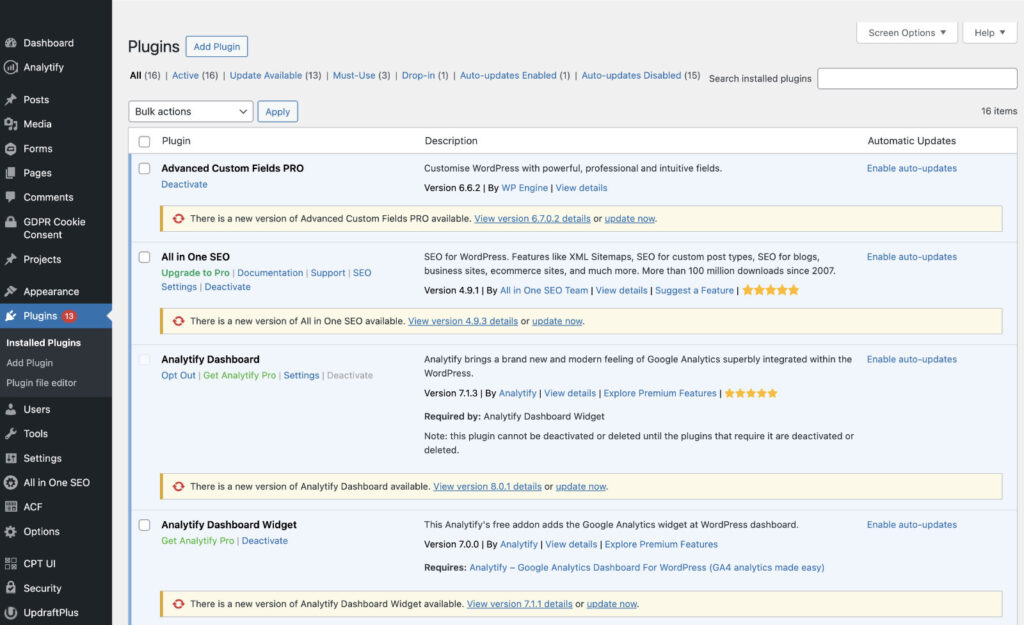
A lot of business owners are surprised to discover that a WordPress website isn’t a one-off purchase. You invest in a build, it goes live and then the assumption is that it just sits there working. For a while, it does. But underneath, things are constantly changing. That’s where understanding WordPress maintenance cost becomes important.
WordPress releases updates. Plugins release updates. Security vulnerabilities get discovered and patched. Hosting environments evolve. None of this is visible to visitors but all of it affects how your site performs, how secure it is and how well it ranks in Google.
The businesses I work with who have maintained their sites consistently over the years tend to have faster, more secure websites, fewer nasty surprises and a much easier time when they do need changes made. A well-maintained site is also considerably cheaper to fix when something does go wrong, because problems get caught early rather than after they’ve compounded.
So what does WordPress maintenance cost in the UK? Here’s an honest breakdown of what the UK market looks like in 2026 and what you actually get at each level.
Why WordPress maintenance cost is worth budgeting for
WordPress powers around 43% of all websites globally. That popularity makes it the most targeted platform on the web. In the first half of 2025 alone, over 6,700 new vulnerabilities were recorded in the WordPress ecosystem, a 34% increase on the previous year, with the vast majority coming from third-party plugins rather than WordPress core itself. You can see the current state of known vulnerabilities at Patchstack’s vulnerability database.
That’s not a reason to avoid WordPress. It’s a reason to maintain it properly.
A hacked WordPress site typically costs a UK small business between £500 and £3,000 to clean up, plus lost revenue during downtime. Under UK GDPR, a data breach from an exploited plugin triggers a mandatory ICO notification within 72 hours. The reputational damage is harder to put a number on but is often worse than the financial hit.
I’ve seen this play out with businesses who’ve come to me after the fact. The cleanup always costs more in time, money and stress than sensible maintenance would have. And that’s before factoring in any ranking recovery work if Google flagged the site.
What WordPress maintenance cost actually covers
Maintenance means different things at different price points. At the base level it covers:
- WordPress core, plugin and theme updates applied carefully, not just auto-updated and left
- Weekly backups stored off-site, not just on the same server as your site
- Uptime monitoring so you know immediately if your site goes down
- Security scanning to catch malware before it becomes a problem
- Basic fixes for anything that breaks as a result of updates
Beyond that, higher-tier packages add content updates, new pages, SEO monitoring, performance checks and priority support response times.
The distinction that matters most is whether updates are applied automatically by a plugin or checked and tested by a person who knows what to look for. Auto-updates don’t verify the site still works afterwards. A professional service provides human oversight so that if an update causes a conflict it gets fixed immediately rather than sitting there broken until someone notices.
What UK businesses are paying in 2026
WordPress maintenance cost in the UK varies significantly depending on whether you’re buying automated updates or a genuine professional service. Here’s how the market breaks down at each level.
Budget tier: £20 to £49 per month
This is the automated end of the market. Updates are applied automatically, there’s usually a ticket-based support system and you’re one of many thousands of sites managed with minimal human involvement. For a simple site with low traffic where downtime wouldn’t cost you much, it might be adequate. For an established business website that generates enquiries, it’s a risk.
Mid-range: £50 to £150 per month
This is where professional maintenance starts. You get a real person checking things, tested updates rather than automatic ones and a named contact when something goes wrong rather than a support queue. A monthly activity report is standard at this level so you can see what’s been done.
Support packages: £150 to £400 per month
This is where maintenance starts to include meaningful support hours, typically two to three hours per month of content updates, text changes, minor additions and fixes. For a business with an active website that needs regular attention, this is usually the right level.
Full support: £400 to £700+ per month
At this level you’re typically getting six or more hours of support per month, the ability to add new pages and landing pages, restructuring work and strategic input beyond just keeping the site running. This suits businesses whose website is central to how they generate revenue and who need a consistent point of contact rather than a project-by-project developer relationship.
My packages, for reference
I offer three maintenance and support tiers for the businesses I work with.
Website Maintenance at £150/month covers weekly WordPress updates, security monitoring, backups and uptime monitoring. This is the foundation, the technical work that keeps a site safe and running.
Website Support at £400/month adds up to three hours per month of content updates, text changes and minor fixes on top of everything in the maintenance tier.
Full Support at £700/month includes up to six hours per month, new landing pages, restructuring work and content guidance alongside full maintenance.
You can see the full details on my maintenance packages page.
What to watch out for when comparing providers
A few things worth checking before signing up with anyone.
What exactly is included in updates? There’s a significant difference between a plugin that auto-applies updates overnight and a person who applies them, checks the site still works and fixes anything that broke.
What’s the response time? Some providers advertise maintenance packages without committing to any response time for when things go wrong. If your site goes down on a Wednesday morning and you don’t hear back until Friday, that matters.
Do you own your accounts and data? Some providers set up your Google Business Profile, directory listings or analytics under their own login. If you ever move, you lose access to everything. Always make sure accounts are set up under your own credentials.
Is there a long contract? Monthly rolling is standard and reasonable. Long minimum terms for basic maintenance are a red flag.
Can you do it yourself?
Yes, but it’s worth being honest about what’s involved. Doing it yourself keeps WordPress maintenance cost down but takes around two to four hours per month: checking for and applying updates carefully, verifying the site still works after each one, running security scans, checking backups and reviewing uptime logs.
That’s not technically complex but it requires consistency. The risk isn’t the tasks themselves. It’s the month where it slips because you’re busy, and that’s the month something breaks or a vulnerability gets exploited.
The WordPress maintenance cost of a professional package is quickly justified when weighed against your hourly rate and what you’d lose if something went wrong. Google’s algorithm rewards speed, security and freshness. A site that never gets updated, accumulates a bloated database and loads slowly will quietly slide down the rankings. Recovering that ground later costs more than maintaining it would have.
The question isn’t really whether you can do it. It’s whether your time is better spent on it or on running your business.
If you’re not sure what level of support makes sense for your site, I’m happy to take a look and give you an honest answer. No pressure, just a straightforward conversation.